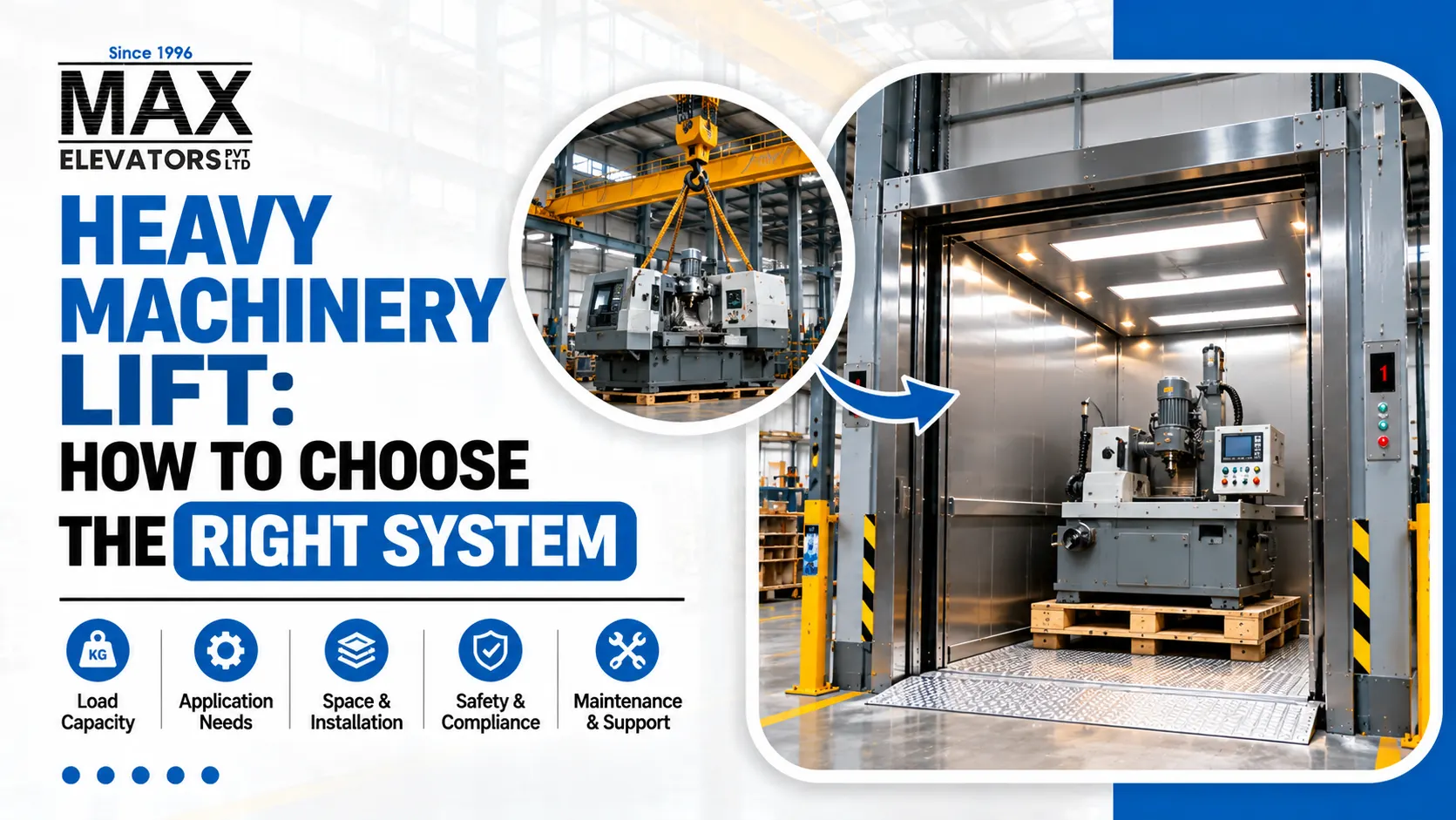
Moving heavy machinery and industrial equipment requires far more than standard lifting solutions. Whether you operate a manufacturing facility, warehouse, factory, or heavy-duty industrial plant, selecting the appropriate lift is critical for safe, efficient, and compliant material handling.
A properly engineered heavy machinery lift allows businesses to transport bulky equipment, heavy components, and industrial materials between floors while drastically reducing manual handling risks and optimizing workflow. However, with varying lift capacities, platform configurations, drive types, and safety regulations to consider, choosing the right system can be complex.
Here are the key technical and operational factors to evaluate before investing in an industrial goods lift.
1. Determine the Required Load Capacity
Load capacity is the foundational metric for any industrial lift. Before looking at specific models, calculate the absolute maximum weight of the machinery, equipment, or materials that will be transported.
Consider the following capacity metrics:
- Maximum load weight: The heaviest single piece of machinery you need to move.
- Accessory weight: The combined weight of pallets, trolleys, or handling equipment.
- Batch weight: The total weight if multiple items are transported in a single trip.
- Safety margins: Buffer capacity required by lift manufacturers and local safety standards to prevent overload strain.
- Future-proofing: Anticipated increases in production scale or equipment size over the next 5 to 10 years.
Always select a lift with a rated capacity that comfortably exceeds your current maximum daily requirements.
2. Evaluate Platform Size and Dimensions
Weight capacity alone does not guarantee a lift is suitable; the platform must seamlessly accommodate the physical footprint of your loads.
Before finalizing a design, measure:
- Length, width, and overall height of your largest equipment.
- Required loading and unloading clearance zones.
- Door opening dimensions to ensure machinery can pass through without bottlenecks.
- Space required for operators, pallet jacks, or forklifts accompanying the load.
A properly sized platform ensures machinery can be positioned securely without unnecessary obstruction. For oversized or unconventionally shaped equipment, a customized goods lift designed around your exact loading footprint is often the safest choice.
3. Select the Right Type of Industrial Lift
Different industrial environments demand specific lift technologies. Understanding the primary drive and design categories helps match the lift to your operational demands.
- Hydraulic Goods Lifts: Utilizing hydraulic fluid and pump systems, these are ideal for moving exceptionally heavy loads across relatively low-rise vertical distances. They offer smooth, controlled movements and are highly cost-effective for heavy lifting over a few floors.
- Traction Goods Lifts: Powered by a motor and cable system, traction lifts are better suited for high-rise industrial environments requiring faster travel speeds.
- Industrial Freight Lifts: Built for high-volume environments, these systems transport large quantities of goods across multiple levels and can be integrated directly into automated production lines.
- Customized Goods Lifts: When standard dimensions fail, customized solutions provide tailored access arrangements, specific weight capacities, and unique operating features.
4. Check Available Installation Space
The physical constraints of your building dictate what type of lift can be installed. Assess the proposed installation area carefully alongside a structural engineer or lift manufacturer.
Critical site measurements include:
- Shaft dimensions: Width and depth available for the lift car and guide rails.
- Pit depth: The space required below the lowest landing to house the lifting mechanism and buffers.
- Overhead clearance: The headroom required above the highest landing.
- Machine room location: Space required for the control panels and hydraulic pump or traction motor.
Your building structure must be capable of supporting both the dead weight of the lift system and the dynamic loads exerted during operation.
5. Prioritize Safety Features and Compliance
Safety cannot be compromised in heavy industrial environments. Your chosen lift must comply with stringent safety regulations (such as EN 81 standards or local workplace safety codes) to protect personnel and inventory.
Ensure your lift includes:
- Overload protection: Sensors that prevent the lift from operating if the weight limit is exceeded.
- Door interlocking systems: Mechanisms ensuring doors cannot open unless the cabin is securely aligned with the landing.
- Emergency lowering: Battery-backed or manual systems to safely bring the lift to the ground floor during a power failure.
- Anti-creep devices: Systems that prevent unintended movement of the lift car during loading/unloading.
6. Consider Loading Workflows and Duty Cycles
Heavy machinery handling often relies on specialized equipment. Your lift must support a smooth transfer process that matches the pace of your facility.
Evaluate your workflow requirements:
- Handling equipment compatibility: Does the lift need a reinforced floor for forklift access or ground-level loading for pallet trucks?
- Access points: Do you require through-loading (front and rear doors) or adjacent entry configurations?
- Duty cycles: How many trips will the lift make per hour? High-frequency operations require heavy-duty motors designed for continuous use without overheating.
- Travel speed: Heavy-duty lifts prioritize torque and safety over speed. Ensure the travel time aligns with your production schedules.
7. Understand Maintenance and After-Sales Support
An industrial lift is a long-term infrastructure investment. Its lifespan and reliability depend heavily on preventive maintenance and immediate technical support.
When evaluating manufacturers, prioritize those who offer:
- Comprehensive warranty coverage on structural and electronic components.
- Readily available spare parts to minimize operational downtime.
- Scheduled preventive inspection programs.
- 24/7 emergency service and technical assistance.
Partnering with an experienced provider ensures your lift remains compliant, safe, and operational year after year.
Optimize Your Operations with Max Elevators
Selecting the right heavy machinery lift fundamentally changes how your business handles material movement, optimizing workflows and drastically reducing manual handling risks.
At Max Elevators, we design and install robust, high-performance goods lifts engineered to meet the toughest industrial demands. From specialized load capacities and custom platform dimensions to advanced safety integrations, we build solutions tailored to your exact operational footprint.
Contact Max Elevators today to discuss your lifting requirements, evaluate your site, and discover the perfect industrial goods lift for your facility.
Looking for Custom Lift Solutions?
Get in touch with Max Elevator engineers for expert consultation and quotes.


